
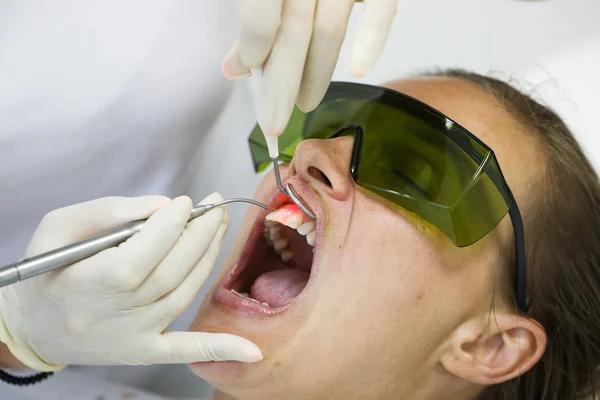
Laser dentistry has emerged as a revolutionary advancement in the field of dental care, offering numerous benefits for both patients and practitioners. One of its most significant contributions is in the realm of dental implants, particularly in enhancing implant healing and maintenance. Dental implants have become a popular solution for replacing missing teeth, but their success largely depends on proper integration with the jawbone and ongoing maintenance to prevent complications.
The use of lasers in dentistry provides a minimally invasive approach that promotes faster healing times and reduces post-operative discomfort. When it comes to implant surgery, laser technology can be employed during various stages of treatment to improve outcomes significantly. During explore the content initial surgical placement of an implant, lasers can be used to make precise incisions with minimal trauma to surrounding tissues. This precision reduces bleeding and swelling, which are common after traditional surgical procedures.
Furthermore, lasers promote biostimulation—a process that enhances cellular activity and accelerates tissue regeneration. This is crucial during the osseointegration phase when the implant fuses with the bone. By stimulating blood circulation and encouraging new cell growth around the implant site, lasers help ensure that this critical bonding process occurs more efficiently.
In addition to improving healing times immediately following surgery, laser dentistry plays a vital role in long-term maintenance of dental implants. Peri-implantitis—an inflammatory condition affecting tissues around an implant—is one potential complication that can jeopardize an implant’s stability if not managed properly. Lasers offer an effective means for treating peri-implantitis by targeting bacteria without causing harm to healthy gum tissue or bone structure.
The antimicrobial properties of certain laser wavelengths allow them to selectively eliminate harmful bacteria residing within periodontal pockets while preserving essential tissue integrity. Moreover, because laser treatments are generally less painful than conventional methods such as scaling or root planing alone; they enhance patient comfort levels significantly throughout maintenance appointments.
Another advantage offered by laser technology lies within its ability not only treat existing issues but also serve preventive purposes effectively too! Regularly scheduled cleanings utilizing these devices keep bacterial populations under control thereby reducing risks associated future development related oral diseases altogether ensuring longevity overall health status maintained optimally possible thanks modern advancements like those found today’s cutting-edge equipment available market now!
Overall impact seen from incorporating into routine care cannot overstated: improved recovery rates reduced incidence complications coupled enhanced preservation natural structures ultimately lead healthier smiles everyone involved making investment worthwhile endeavor indeed!
